Her Period Should Not Decide Her Future
Raised
₹0 of ₹3,11,010
I still remember the day our team visited a government school in Mumbai and sat down with a group of teenage girls after class. We were conducting a session under our Aarabhm programme, and slowly, as trust built, the girls began to speak honestly. One of them said, “Ma’am, I stay home during my periods because I don’t have pads.” Another shared how she wraps old cloth and prays it doesn’t stain her uniform. They weren’t missing school because they lacked ambition. They were missing school because they lacked something as basic as a sanitary pad. That day stayed with me. It forced me to confront a painful truth: for many girls, biology is becoming a barrier to education.
I founded Rise India Foundation in 2015 with a simple belief: dignity and opportunity should not depend on income. What began as small community interventions gradually evolved into structured programmes across underserved areas of Mumbai and Thane. Over the years, as we worked closely with schools and families, we kept seeing one recurring issue that no one was addressing seriously enough: menstrual health. That is how our Aarabhm programme was born, with the goal of replacing shame with awareness and silence with confidence.
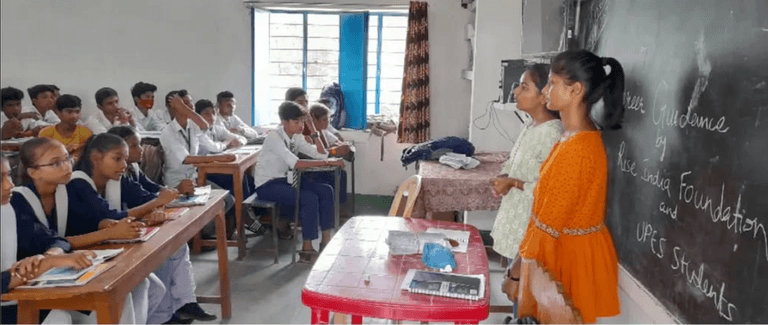
Through Aarabhm, we have already reached nearly 2,000 students across 15+ government schools, educating girls about menstrual health, safe hygiene practices, and the science behind their bodies. We have trained teachers to handle period-related absences sensitively and created safe spaces where girls can ask questions without fear. But awareness alone is not enough. Again and again, girls told us the same thing: they understood periods better now, but they still could not afford pads. When a family survives on ₹200–300 a day, even ₹40 for a pack becomes a burden. Food comes first. Rent comes first. Pads come last.
This is why we have committed to distributing 1,000 sanitary napkin packs across Mumbai and Thane before March 15, 2026. Each pack costs ₹300 and supports a girl for three to four months. In the communities where we work, nearly 80–90% of families earn less than ₹15,000 per month. Girls miss up to 3–5 days of school every month, which adds up to nearly 50 days a year. According to UNICEF, 23% of girls in India drop out after they start menstruating. These are not just statistics to us; they are the faces we meet in classrooms every week.
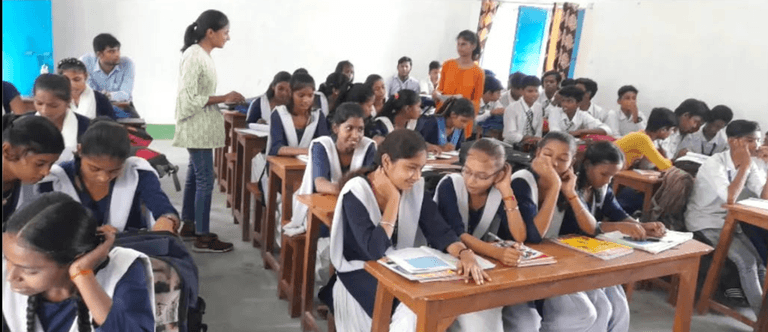
When we distribute these packs, we do it with dignity and privacy. We visit the schools ourselves, ensure teachers are present, and speak directly with the girls. Along with the pads, we provide guidance on safe usage and disposal, and we continue follow-up education sessions. Every donation directly funds the purchase of sanitary napkins and the execution of these sessions. As an 80G-certified organisation, we also ensure transparency, receipts, and impact reports for every supporter. Our goal is ₹3,00,000, and every ₹300 keeps one girl in school.
To me, this campaign is not charity. It is justice. No girl should have to choose between attending school and managing her period. No girl should feel ashamed of a natural biological process. When you support this campaign, you are not just donating pads; you are giving a girl confidence, continuity in education, protection from infection, and the assurance that her future will not be interrupted every month. Before the new academic year begins in April, I want 1,000 girls to walk into school knowing their period will not hold them back. I invite you to stand with us and be part of that change.

No guilt-tripping or pressure
Every appeal respects your choice to give, without emotional coercion.

Transparent use of funds
Donations are tracked and used only for verified needs, with clear updates where possible.

No spam for donations
You'll never receive phone calls or WhatsApp messages asking you to donate more.
Created By:
Rise India Foundation
This fundraiser will benefit:
Rise India Foundation
If something isn't right, we will work with you to ensure no misuse occurs.
Raised
₹0 of ₹3,11,010